
Wildlife ecotoxicology
The 1st Wildlife Ecotoxicology Conference will bring together researchers from across the world in Murcia to showcase the latest advances in understanding contaminant exposure, effects, and risks in wildlife. By fostering international collaboration and knowledge exchange, this meeting will contribute to strengthening wildlife ecotoxicology as a key field for protecting biodiversity and ecosystem health.
Let’s bring wildlife ecotoxicology together!
Join us in Spain, share your science, connect with colleagues, and be part of the very first edition.

Keynote Speakers


Dr. Katrine Borgå
Dr. Rafael Mateo
Dr. Kim Fernie
Department of Biosciences, University of Oslo, Norway
Institute of Environmental Assessment and Water Research (IDAEA-CSIC), Spain
Ecotoxicology and Wildlife Health Division, Environment and Climate Change Canada, Canada

Scientific sessions
Exposure pathways and bioaccumulation in wildlife
Emerging contaminants, exposure pathways, trophic transfer, biomagnification, ecosystem connectivity, multiple contaminants and chemical mixtures.
Biomarkers and sublethal effects
Sublethal effects across wildlife species, using integrative approaches to understand responses at different levels of biological organisation.
Sentinel species and vulnerable biodiversity
Sentinel species for environmental monitoring and vulnerable populations, including birds of prey, amphibians and marine mammals.
Ecotoxicology in terrestrial and aquatic ecosystems
Ecosystem-level risks and contaminant impacts, including mesocosm approaches and studies in natural environments such as agricultural landscapes.

Murcia 2027
Getting to Murcia
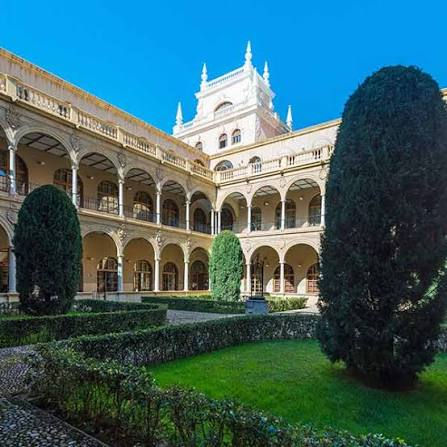
The conference will be hosted at the Campus de la Merced of the University of Murcia, located in the city center of Murcia, in southeastern Spain. Murcia is well connected to major Spanish and European cities by air, train, and bus.
By plane
Alicante–Elche Miguel Hernández Airport (ALC) is the closest major international airport and is the recommended option for most international participants. The airport is approximately 70 km from Murcia.
From Alicante Airport, you can take a direct bus to Murcia, with a journey time of approximately 55 minutes. The bus connects the airport directly with the city of Murcia. The bus terminal is within walking distance from the venue (1.5 Km).
Murcia International Airport (RMU) is closer to the city and also has connections to Murcia by bus. However, it has fewer international flights, all mainly from the U.K.
By train
Murcia is connected by high-speed and long-distance trains to several major Spanish cities. Murcia del Carmen railway station is the city's main train station and is centrally located.
Venue
The conference will take place at the Campus de La Merced, located in the centre of Murcia.
The campus is easily accessible by public transport. Several city bus routes stop near the university, including lines R14, R80, R17, 29,31, 32A, 35 and 37. The closest stops are “Universidad” and “La Merced”, both only about a 3-minute walk from the campus.
Abstract
• Title: max. 150 characters, including spaces
• Authors: full names
• Keywords: 3–5
• Language: English
• Length: maximum 300 words (excluding title, authors, affiliations, keywords, and acknowledgements)
• Figures/tables: not permitted
•Presentation format: Oral or Poster (final decision by the Scientific Committee)
* Deadline: October 30 th.
Registration
The deadline for registration is November 15 th and will open soon!
Standard fee: €250
Reduced fee: €150 for students and early career researchers (< 5 years after PhD).
The price includes lunch and coffee break snacks.
For further information:
wildlifetoxicologyconference@outlook.com

Pilar Gómez-Ramírez and Pablo Sanchez Virosta, University of Murcia, Spain (Conference Chairs)
* Veerle Jaspers, Norwegian University of Science and Technology (NTNU), Norway
* Céline Arzel, University of Turku, Finland
* Mónica Martinez-Haro, Institute for Game and Wildlife Research (IREC, CSIC-UCLM-JCCM), Spain
* Catarina Jota Baptista, Egas Moniz School of Health and Science (CiiEM), Portugal.
Organizing committee
Natalia Sandoval Herrera, Department of Wildlife, Fish and Environmental Studies, Swedish University of Agricultural Sciences, Sweden
* Clémentine Fritsch, CNRS, Dpt. Chrono-environnement (Université Marie et Louis Pasteur / CNRS), France
* Marta Herrero Villar, IDAEA-CSIC, Dpt. Chemometrics for Environmental Omics (Ch4EO), Institute of Environmental Assessment and Water Research (IDAEA)/ Spanish Council for Scientific Research (CSIC), Spain.
* Ana López Antia,Institute of Environmental Assessment and Water Research (IDAEA)/ Spanish Council for Scientific Research (CSIC), Spain.
* Maria Dulsat Masvidal, University of Turku, Finland
Maciej Durkalec, National Veterinary Research Institute, Poland
* Karina S.B. Miglioranza, Lab. de Ecotoxicología y Contaminación Ambiental. Instituto de Investigaciones Marinas y Costeras-CONICET. FCEyN, Universidad Nacional de Mar del Plata
* Christian Sonne, Aarhus University, Faculty of Technical Sciences.Department of Ecoscience, Arctic Research Cluster (ARC).Danish Centre for Environment and Energy (DCE)
* Aafke I. Saarloos, Division of Toxicology, Wageningen University & Research, the Netherlands